Share
Share
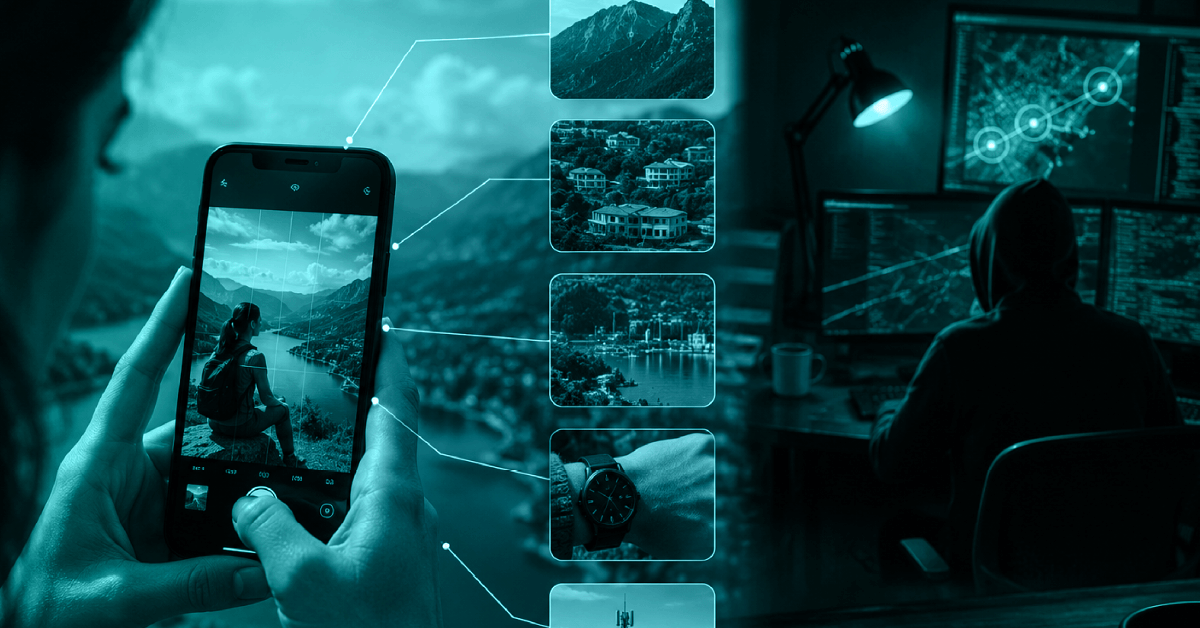
Social media has made it easier than ever to share moments from our daily lives. Whether it’s a coffee break, a business trip, or a workspace photo, these posts often seem harmless. However, every image contains more information than what we intentionally choose to share. To a cybercriminal, a single photo can reveal valuable details about an individual or organization.
At ABSEGA, we understand that cybersecurity extends beyond securing networks and devices. It also involves recognizing how everyday digital habits, including sharing photos online, can unintentionally expose sensitive information. Using Open-Source Intelligence (OSINT), attackers gather publicly available information from websites, social media platforms, and online content to build a profile of their target.
What Can One Photo Reveal?
A photo taken at a café, airport, office, or even at home can unintentionally expose information that attackers can use:
Your Location
Even without geotagging, photos often contain clues that help identify where they were taken. Storefronts, street signs, building designs, menus, receipts, Wi-Fi network names, and even reflections in windows can reveal a specific location.
By comparing these details with publicly available maps and images, attackers may be able to determine exactly where the photo was taken.
Your Workplace
Photos taken while working remotely or from the office can expose information about your organization. Visible elements such as company badges, branded notebooks, browser portals, laptop stickers, or internal URLs may reveal your employer, the technologies your organization uses, or the systems you access.
This information can help attackers create convincing phishing emails or fraudulent login pages that appear legitimate.
Your Business Information
Modern smartphone cameras capture an incredible level of detail. Information that seems unreadable on a small screen can often be enlarged or enhanced.
A workspace photo may unintentionally reveal:
- Customer names
- Project titles
- Email previews
- Meeting invitations
- Internal applications
- File names
- Presentation topics
- Deadlines
These details can provide attackers with valuable business intelligence.
Your Travel Plans
Travel-related posts often reveal more than expected. A boarding pass, luggage tag, hotel reservation, or passport cover may expose your destination, travel dates, or flight information. Posting in real time can also indicate when your home or office is likely to be unoccupied.
Your Daily Routine
Cybercriminals rarely rely on a single post. Instead, they collect information over time to identify patterns and routines.
Repeated posts may reveal:
- Frequently visited locations
- Working hours
- Daily schedules
- Travel habits
- Common routes
- Office occupancy patterns
Understanding these routines allows attackers to make their communications appear more authentic and better timed.
Your Relationships
Images may also reveal personal and professional relationships through contact names, meeting invitations, notifications, captions, or tagged individuals.
Combined with other publicly available information, these details can help attackers create highly personalized phishing or social engineering attacks using real names, organizations, and events.
Don’t Ignore the Background
The main subject of a photo is not always the greatest concern.
Background details may unintentionally expose:
- Computer screens
- Whiteboards
- Access badges
- Documents
- Mobile notifications
- Mirrors or windows
- Glass surfaces and reflections
Even a small reflection can reveal information that was never meant to be shared.
Metadata Is Only Part of the Risk
Disabling geotagging is an important security measure, but it does not eliminate the risks associated with sharing photos online.
The visible content of an image, including landmarks, architecture, language, weather conditions, or public transportation signs, may be enough to identify where it was taken, even when location metadata has been removed.
Think Before You Share
Before posting a photo, take a few seconds to review what it reveals.
Ask yourself:
- Can someone identify my location?
- Does this reveal where I work or the systems I use?
- Are any confidential documents or screens visible?
- Does this expose names, contacts, or business relationships?
- Am I revealing where I am or where I’m going?
Simple precautions such as cropping images, blurring sensitive information, hiding notifications, and delaying travel posts can significantly reduce unnecessary exposure.
Cybersecurity extends beyond protecting devices and networks; it also includes protecting the information we choose to share online. A single photo may seem insignificant, but when combined with other publicly available information, it can help cybercriminals build a detailed picture of an individual or organization. At ABSEGA, we encourage organizations and individuals to build cybersecurity awareness into their everyday digital habits. Reviewing a photo before posting it is a simple step that can significantly limit information exposure and make it more difficult for attackers to gather valuable intelligence. The next time you share a photo, look beyond the subject. You may discover that it reveals more than you intended.